When muscles are tight, they may be grabbing to protect — not simply short

When a hamstring grabs, it is easy to assume the hamstring is short.

That is the usual explanation.

Stretch the hamstring.

Lengthen the muscle.

Loosen the tight area.

But our bodies are not always that simple.

Sometimes a muscle grabs because our brain is protecting.

And if the muscle is protecting, stretching the muscle may not address why the protection is there.

Protection can be measured

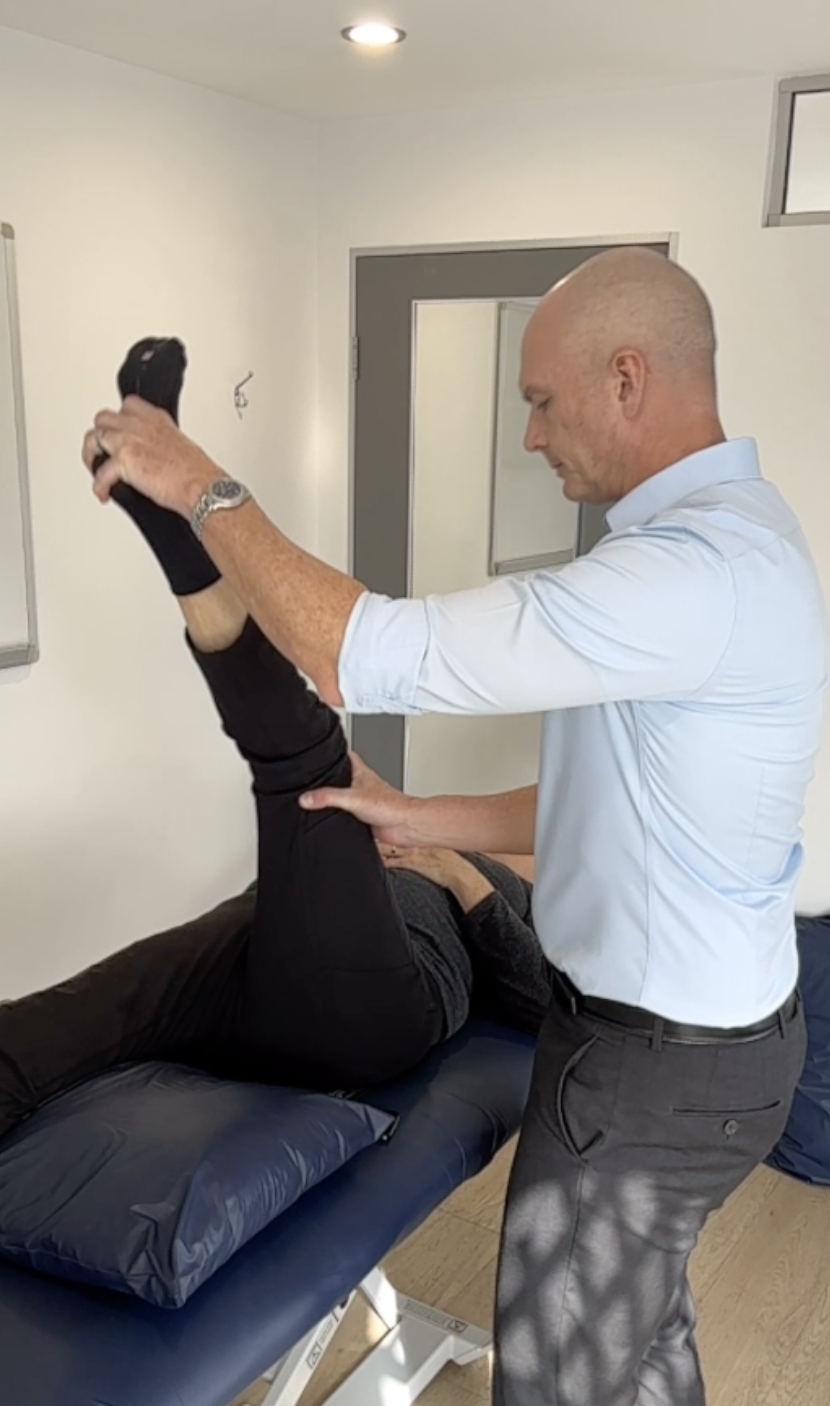
In the video, we use the hamstring as a measure.

As the leg lifts, the hamstring grabs.

That grabbing shows us where the body begins to protect.

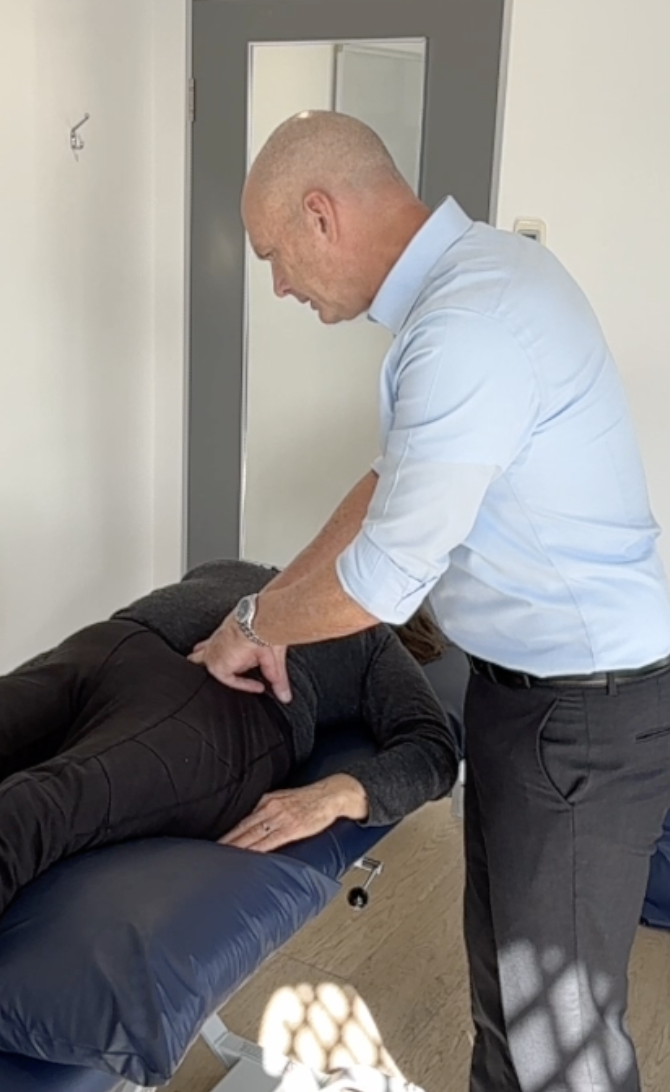
Then we release an area of strain at the front of the spine.

After that, we re-test the same leg movement.

If the leg lifts further, and the hamstring grabs later, that tells us something important.

The hamstring did not suddenly become permanently longer in a few seconds.

The protection changed.

And when protection improves, movement can improve.

Pain can improve.

Strength can improve.

The body can let go.

This is why we do not only chase the sore area

Many people with back pain are treated around the lower back.

That makes sense.

The back hurts, so the back gets treated.

But sometimes the body is protecting the back because of strain somewhere else.

In this video, the useful change came from releasing an area at the front of the spine.

That matters.

Because the body showed us that this area was more useful than only working on the lower back.

That does not mean the lower back is irrelevant.

It means the body’s response gives us better information than guessing.

The body gives clues through response

At Youngify, we pay close attention to what changes.

A muscle grabs.

A movement blocks.

A joint feels locked.

A leg will not lift.

A trunk will not turn.

Then we release an area and re-test.

If the movement improves, the body has given us a clue.

If the movement does not improve much, that is also useful.

It tells us that area may not be the main priority.

So we compare responses.

We keep testing.

We keep re-testing.

And we use the body’s own changes to work out what helps most.

Tightness is not always a stretching problem

This is one of the most important things for people with ongoing pain to understand.

A tight muscle is not always just a short muscle.

A weak muscle is not always just a weak muscle.

A painful area is not always the only problem.

The brain controls muscles.

The brain controls movement.

The brain also controls pain.

So when our brain decides protection is needed, that protection can show up as tightness, grabbing, weakness, guarding, restricted movement, or pain.

That is why stretching, strengthening, massage, or local treatment may help briefly but fail to hold.

The treatment may have changed the symptom.

But it may not have changed why the body was protecting.

The goal is not just a quick release

A quick improvement is useful because it gives information.

But the goal is not just to get a short-term change on the table.

The goal is to understand what the body is responding to.

Then we build a plan around helping that result hold.

We want the body to stop needing the same protection again and again.

We want movement to feel clearer.

We want the back to stop grabbing.

We want the nervous system to settle.

And we want people to understand their body well enough to stop feeling confused by it.

This may be worth exploring if…

Hamstrings keep feeling tight, even after stretching.

Back pain keeps returning.

The body keeps grabbing, locking, guarding, or flaring.

Treatment helps briefly, but the result does not hold.

The sore area keeps getting treated, but the body keeps protecting.

There is a sense that something is being missed.

At Youngify, we use a neuroscience-based process to test what the body is protecting.

We release.

We re-test.

We compare what changes.

Then we use those changes to work out how to help the body let go properly.

You are welcome to book a free call.


Book a free call.

We can talk through what has been happening, what has already been tried, and whether this process sounds appropriate to test.

No pressure.

No promise.

Just a clear conversation.


Prefer to understand more first?

You can also download our free ebook:

Want Your Pain ‘Managed’ — Or Gone?

It explains more about the Youngify approach and why pain often needs to be tested differently.

Also, rest assured, we will never share your details, and you can unsubscribe at any time.